China Back-to-School 2025: The Three Forces Behind a CN¥ 49.9B College Season
 By Jessie Wang
6 min read
By Jessie Wang
6 min read
Executive Summary#
Get the Full Report: Download the complete analysis for detailed data, methodology, and pages of insights.
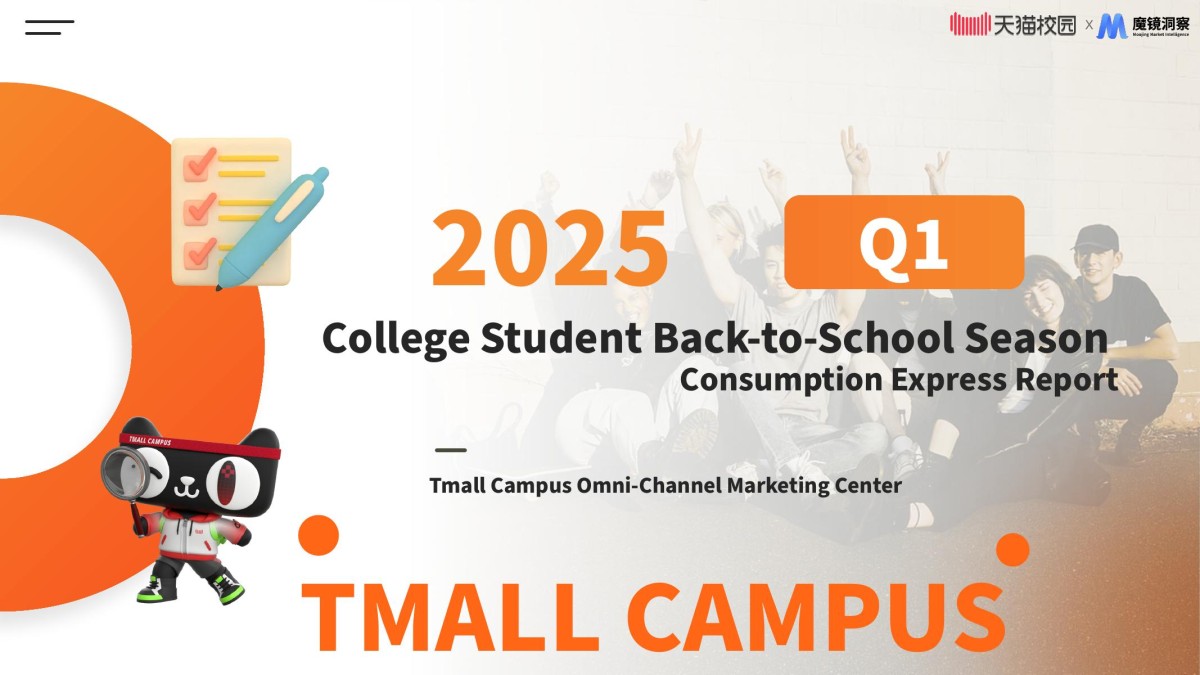
China's college-student back-to-school season in Q1 2025 reached roughly CN¥ 49.9B (~US$ 6.9B) in online spend across some 525.5M orders, and three consumption pillars decided where that budget went. Produced through the Tmall Campus (天猫校园) × Moojing partnership, this whitepaper reads the season through campus 3C and digital, where national subsidies powered a device-upgrade peak; refined personal care, where students moved from basic routines to ingredient-savvy repair; and style-led fashion, where occasion and value outweighed brand names. The season runs on a distinctive rhythm — a lag effect that concentrates spend around the March 8 promotion rather than the first week of term — and its discovery is overwhelmingly peer-to-peer, with grassroots student creators driving more than 98% of mention share. For brand teams, the takeaway is that the campus consumer now buys on measurable function, informed ingredients, and situational styling at once.
A Season Built on a Lag Effect#
The CN¥ 49.9B (~US$ 6.9B) headline matters less than its timing. Spring semesters begin in late February, yet students routinely delay their back-to-school purchases so they land inside the March 8 promotional window, where pricing is most favourable. The result is a season that peaks after term has already started, not before it.
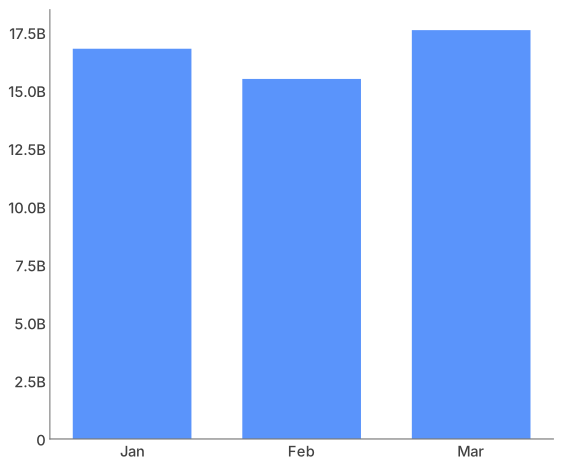
Monthly GMV shows the pattern clearly. January recorded CN¥ 16.8B as early planners stocked up, February eased to CN¥ 15.5B during the semester-start lull, and March climbed to CN¥ 17.6B as the promotion pulled deferred demand forward. The season is best understood as a March-8 event with a long pre-roll, not a single first-week rush.
The cohort behind the spend is distinctive. Discussion skews female at 58.7% versus 41.3% male, and it concentrates in high-tier cities, which account for 76.0% of the conversation — Tier-1 at 33.2% and New Tier-1 at 26.1% together reach a combined 59.4%. Discovery is almost entirely peer-led: grassroots student creators generate more than 98% of mention share, so brands succeed by partnering with campus voices rather than broadcasting to them.
3C led the campus basket
Pillar One: Campus 3C Rode the Subsidy Wave#
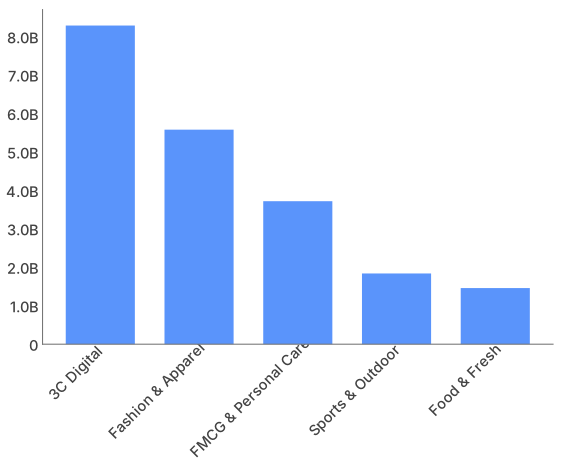
The first pillar is the largest. 3C and digital reached CN¥ 8.29B in student spend, the biggest single category of the season, and national subsidies of up to 15% turned routine replacement into a genuine device-upgrade peak. The effect was strong enough that laptop consumption in February 2025 ran +12% above the single-month sales of the prior Double 11 — a promotional benchmark that campus demand exceeded on subsidy strength alone.
Brand demand was broad and healthy. Apple led smartphone spend at CN¥ 1.63B, while Lenovo led laptops at CN¥ 0.80B, with Xiaomi and Huawei rounding out a competitive field of upgrade options. What students were buying, and why, is just as telling: learning tools carried the highest purchase-trigger mention rate at 33.8%, framing the device as an instrument of study rather than pure lifestyle. AI-tool penetration of roughly 40% reinforces the point — this is a cohort equipping itself for an AI-native academic workflow.
Spend concentrates around the March 8 promotion
Pillar Two: Personal Care Moved to Refined Repair#
The second pillar is where the campus routine grew more sophisticated. FMCG and personal care reached CN¥ 3.72B, and the story inside it is a shift from basic care toward ingredient-savvy "refined repair" — students reading formulations and buying for a specific concern rather than a generic promise.
The signals are precise. Facial cleansing conversation centres on oil control at 28.9% of the topic, matching the priorities of a young, high-frequency-wear cohort. Ingredient literacy is rising fast: amino acids dominate the ingredient conversation at 46.3% of interactions, a marker of students trading up to gentler, better-understood chemistry. Category engagement also runs deeper than raw mention volume suggests — shampoo draws only 6.5% of mentions but 44.9% of interactions, showing that the most-discussed categories are not always the most engaging, and that repair-oriented hair care punches well above its share of voice.
Pillar Three: Fashion Bought Style, Not Brand#
The third pillar reallocates budget toward expression. Fashion and apparel reached CN¥ 5.58B, and it is defined by limited brand loyalty: style and occasion, not logos, drive the purchase. Down jackets led seasonal spend, a practical anchor for a Q1 season, while the deeper engagement clustered elsewhere — women's clothing drew just 3.7% of mentions but 12.2% of interactions, again showing engagement outrunning mention share.
The aesthetic is a triad. Collegiate, affordable, and Y2K styling have become the new campus mainstream, a style-led rather than brand-led mix that rewards versatility over prestige. Chinese Hanfu illustrates the same dynamic: around 4.0% of mentions but the single highest engagement of any style, a cultural-confidence signal worth more than its volume. When students explain their choices, they lead with occasion and scenario at 18.0% and value for money at 16.7% — a buyer optimising for where a garment fits their life and what it returns for the price.
Why the Three Pillars Matter Together#
Read separately, each pillar is a category trend. Read together, they describe one consumer: a student who expects a device to earn its subsidy through study utility, a skincare product to name the ingredient that solves a specific concern, and a garment to suit an occasion at a defensible price. Across all three, discovery is peer-to-peer and engagement often outruns mention share, so the winning brands are the ones campus creators choose to talk about — not the ones with the loudest broadcast. That is the strategic shift the 2025 season made visible, and it is the lens the full whitepaper applies pillar by pillar.
About the Data#
This article summarises findings produced through the Tmall Campus (天猫校园) × Moojing partnership. E-commerce figures are sourced from the Tmall Campus Marketing Data Center; social-listening signals come from Moojing's proprietary CMI coverage across leading short-video and lifestyle-sharing platforms. Data covers Q1 2025 (January–March). Figures reference the highest-engagement category and brand pools per theme, not a full census, and exclude offline retail and B2B/wholesale channels. Currency conversion uses the 2025 average of roughly CN¥ 7.2 per US$.
Download the Full Report
Get the complete analysis with detailed data, methodology, and additional insights.
Download the College Student Back-to-School Season Consumption Report
This content adheres to Moojing's editorial standards .